The Undesirables
Created by Will G., Conor K., Trey D. & Baxter J.
How the Nazis persecuted and killed many groups of people including Roma, disabled people, and political prisoners (1933-1945)
Forgotten
Artist Statement
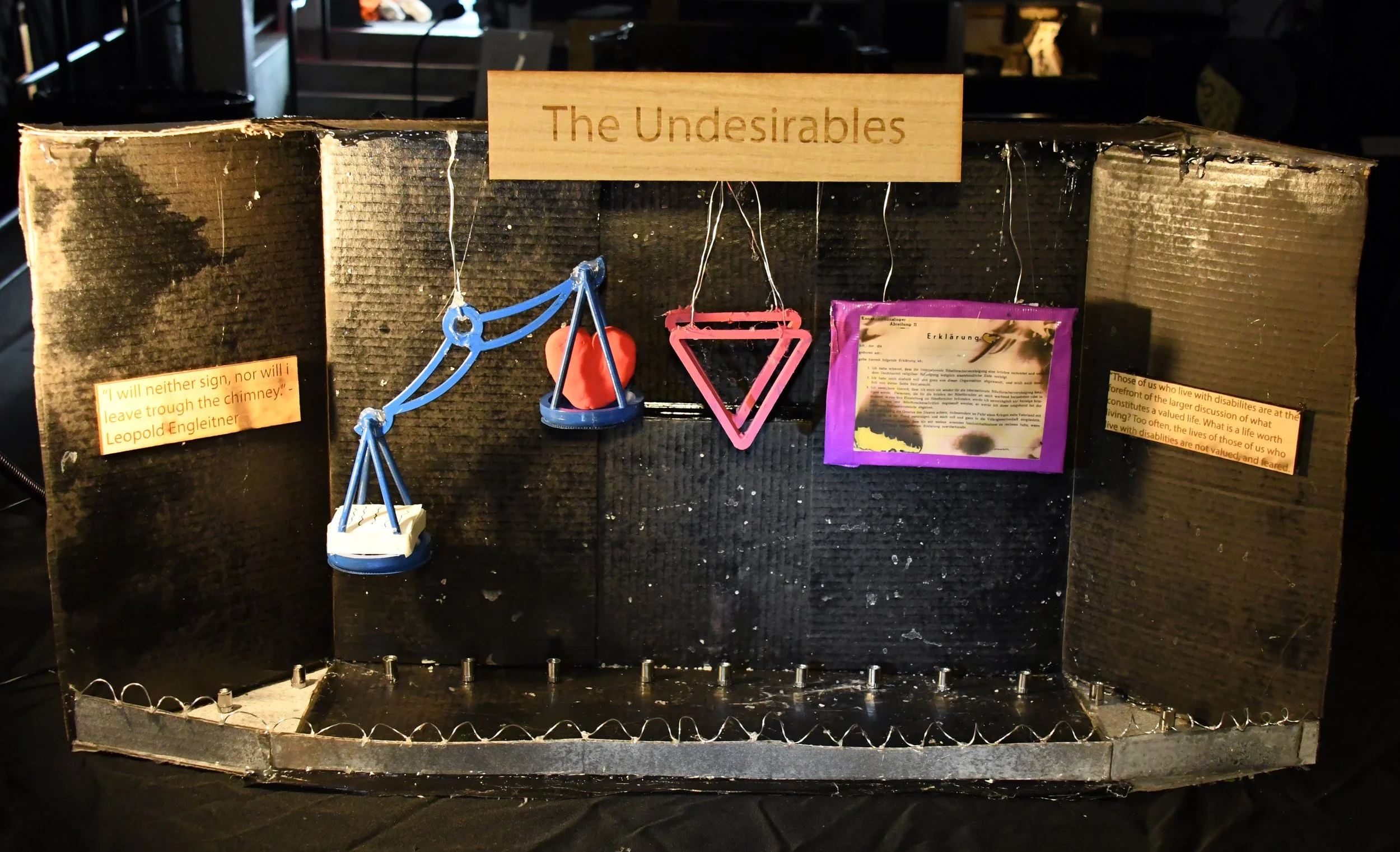
"Undesirables,"our artifact, showcases the groups most forgotten in the Holocaust story. The term"Undesirables" referred to anyone not deemed Aryan or “normal” by the Nazis: disabled people, LGBTQ+ individuals, and Jehovah's Witnesses among others. These groups, though often forgotten, were also persecuted and treated as less than human. From our research, we not only learned about the atrocities these people faced, but also the light they found during these harsh times. Our artifact depicts three symbols representing humanity, resistance, and persistence even through the darkest of circumstances. The goal of our artifact is to represent the groups deemed "undesirable" through the use of the Nazis’ color designations for various groups.
The first symbol we chose was for the disabled people. We decided on an unbalanced scale with a stack of papers on the left side, representing the German’s idea and notion of a person’s productivity and usefulness; qualities the Nazis valued. Balanced against that on the right side, a heart, representing the humanity and self worth of disabled people, ignored by the Nazis. The papers outweigh the heart on our scale, demonstrating how the Nazis wrongly devalued people’s dignity and worth . Based on the opinion of Nazi leadership, doctors evaluated disabled people on their usefulness, deeming them "unworthy of life". However, the humanity of these people was real and valuable.
For the LGBTQ+ symbol, our group decided on creating two pink triangles that are separate but aligned, showcasing how LGBTQ+ individuals faced the darkness by coming together and finding light. The humanity element of this piece is demonstrated through the connection people had during these dark times of separation and despair. For example, Stefan Kosinski, an LGBTQ+ individual, found a relationship with a German guard in the hardships of the concentration camp. The shifting perspective represents how their love had to be hidden or revealed depending on a person's perspective . Light represents finding hope, love, and humanity in impossible circumstances.
A little known group persecuted by the Nazis were Jehovah's Witnesses. These people were targeted for their religion and refused to hang Nazi flags or participate in Nazi rituals. Our symbol represents the actual document they had to sign, renouncing their religious beliefs in order to leave a concentration camp. The purple border represents the color of the badge every Jehovah’s Witness wore as they were sorted in the concentration camps. When viewing our artifact, we left the spot to sign purposely blank, because out of the 25000 Witnesses that were imprisoned, only about 5000 renounced their faith. Jehovah's Witnesses were unique because they could have left by renouncing their faith, but they chose persecution by the Nazis over betraying their beliefs.
Throughout the whole piece we used light and shading to represent hope and darkness. The lights on the bottom are color changing showcasing all the different people that were affected by the horrible sequence of events. All the symbols work together as a whole to create one big showing of who is .undesiraelable. The elements and principles used throughout our artifact try to reveal the persecution of other groups faced during the Holocaust. Our hope is that the people will see this artifact and become aware of the horrible events faced by other victims of Nazi hate.
