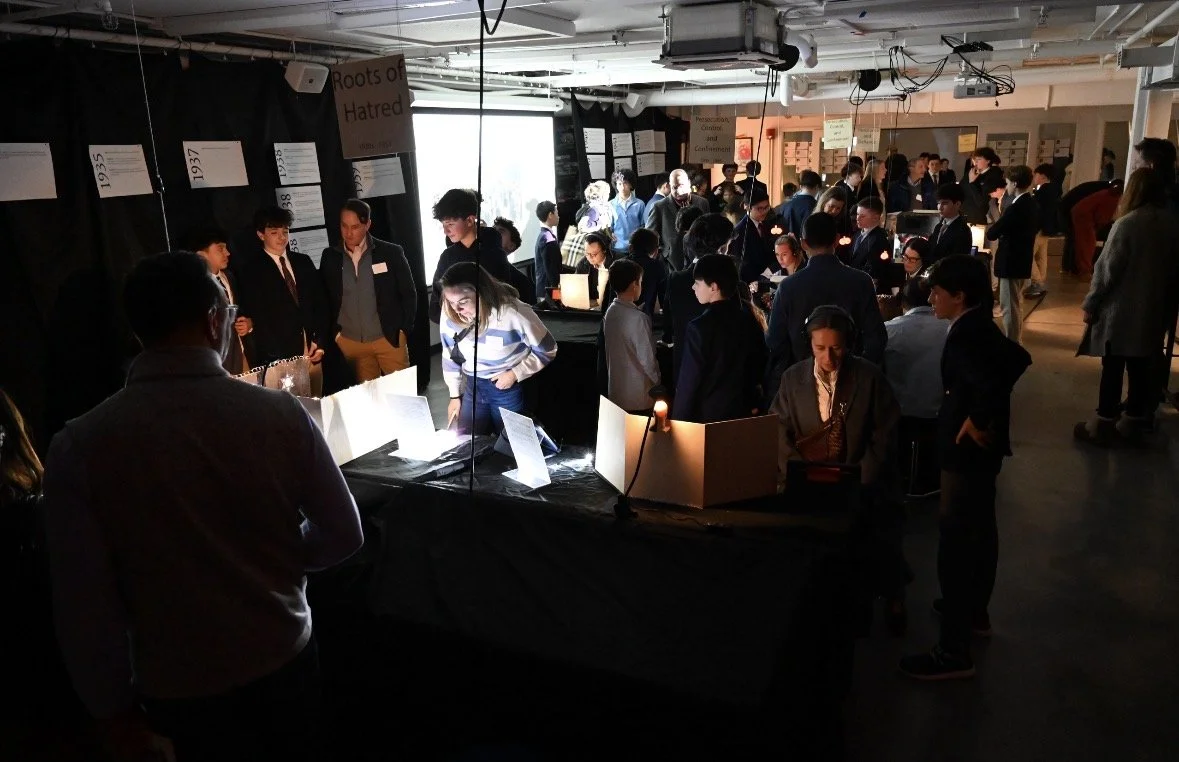
MUSEUM OPENINGS:
WEDNESDAY, MARCH 4 (5:30PM-7:30PM): PARENTS AND FAMILIES
THURSDAY, MARCH 5 (8:00 AM-3:00 PM): FENN COMMUNITY AND GENERAL PUBLIC
FRIDAY, MARCH 6: (8:00 AM-12:00 PM): FENN COMMUNITY AND GENERAL PUBLIC
Eighth grade students at the Fenn School have created a museum exhibition to preserve and share Holocaust history. Through research and creative expression, they tell the stories of real people: those who suffered, those who persecuted, those who resisted, those who rescued and those who survived.
Quick Facts
Fact 1: The Topics
18 Topics researched and presented by student groups organized into 6 Themes in the museum
Fact 2: The Organizations
3 Organizations students worked with to develop the project: Facing History and Ourselves, The Concord Museum , and the University of Southern California Shoah Foundation’s iWitness Project
Fact 3: The Stories
Multiple Perspectives: Persecution, Resistance, Rescue, Resilience, and Remembrance
Fact 4: The Format
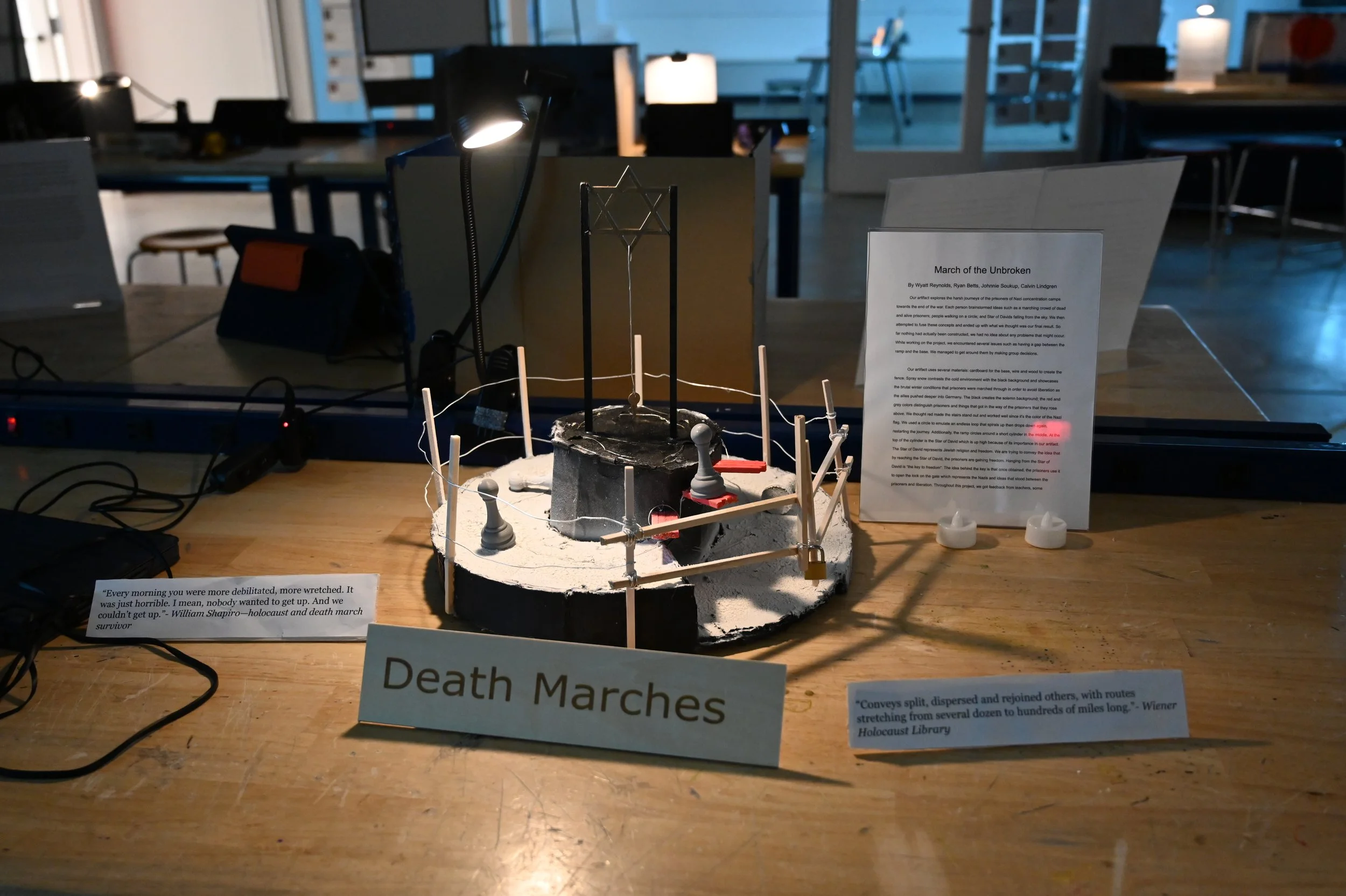
Artifacts and Documentaries: Each exhibit includes a student-created artifact, documentary video, and artist statement, all informed by secondary and primary source research and testimonials.
Fact 5: The Impact
For All Ages: Designed for students in grades 4-12 and adult visitors
Our Process
Interdisciplinary Learning
Prior to the project, 8th Grade English and social studies classes are devoted to Holocaust Studies. In social studies, students learn about the fledgling democracy in Germany during the interwar period known as the Weimar Republic (1918-1933). Students analyze the historical factors and simulate the choices made by real citizens that led to the rise of the Nazi Party. In English, students build background knowledge about the Holocaust before reading Elie Wiesel’s seminal memoir “Night.”
Research
Students are assigned a topic related to the Holocaust. They each independently research the topic through Fenn’s libguides utilizing secondary sources, primary sources and iWitness testimonials from University of Southern California’s Shoah Foundation. They collectively pool their research to build their understanding for their projects.
Design
In mid February, the project launches. All classes meet in the Stone Family Innovation Lab. Students learn about elements of art and principles of design and symbolic thinking with a member of the Fenn’s art department, before integrating these elements and principles into their own artifact designs. Students watch a variety of documentaries before deconstructing them to understand what makes for powerful storytelling. They utilize these understandings in the construction of their own documentaries about their Holocaust topic. Members of the Concord Museum teach students about how to create interactive and dynamic museum exhibits.
Present
A Fenn parent shares his family’s story of Japanese-internment during World War II with the Upper School. A Holocaust survivor meets with the students on the day of the museum opening for the Fenn community. Families, community members, and descendants of Holocaust survivors visit the museum to learn from students.